

Contents
Written by Matt Hogan
Over the past year, I’ve found that most conversations about AI inside companies tend to begin in the same place: with tools.
Which model are we using? Which assistant integrates best with the IDE (Integrated Development Environment)? Which vendor has the strongest roadmap? What should we allow? What should we standardize?
Those are reasonable questions. In some cases, they are even urgent ones.
But I do not think they are the most important questions.
From Tools to Operating Model
What has become increasingly clear to me is that AI is not best understood as a tooling decision. It is an operating model decision. The real issue is not whether a given team has access to the right assistant, or whether one function is moving faster than another because it adopted a more capable model a few months earlier. The deeper issue is that AI is beginning to change how work itself is performed: which parts remain human, which parts become assisted, which parts become delegated, and how all of that affects the structure of the company over time.
That is a larger shift than most organizations are currently acknowledging.
It is also one that is easy to misread.
The easiest mistake is to interpret AI through the narrowest possible lens: a productivity tool for individual contributors. At one level, that is true. Engineers can move faster. Marketers can draft more quickly. Sales teams can prepare more effectively. Support teams can retrieve and synthesize information faster than before. These are real gains, and any organization that ignores them is choosing, in effect, to operate with self-imposed drag.
But if we stop there, we will miss the more important transformation.
The most significant changes in how companies operate rarely come from tools alone. They come when a new capability is strong enough that the surrounding workflow, and eventually the surrounding organizational model, has to adapt to it. We have seen this before. The cloud did not merely give us better servers; it changed how infrastructure was provisioned, funded, and managed. Agile did not merely introduce standups and sprint boards; at its best, it changed how planning, coordination, and delivery worked across teams. In both cases, the organizations that benefited most were not the ones that simply adopted the vocabulary. They were the ones that reconfigured how work actually moved through the system.
AI is now pushing us toward a similar moment.
What makes this one different is that the shift is closer to the work itself. The internet changed distribution. The cloud changed infrastructure. AI changes execution. It changes how quickly ideas can be translated into drafts, how much analysis can be completed before a human ever begins, how many repetitive steps can be delegated, and how much context can follow a piece of work as it moves from one function to another. In that sense, AI is not simply another system to be managed. It is beginning to act on the system.
That has implications that go well beyond any one tool or team.
Three Pillars of AI Adoption
At Liferaft, I think the most useful way to understand this is through three pillars.
The first pillar is AI-assisted work. This is the layer most organizations are already touching, even if unevenly. It is the use of AI to improve the work of individuals and teams: helping engineers implement, test, and review software more effectively; helping marketing develop and refine content more quickly; helping sales prepare, summarize, and follow up with greater speed and consistency; helping support and customer-facing teams retrieve information and respond with more context. This is the most visible layer because it produces immediate gains. It is also the easiest to mistake for the whole story.
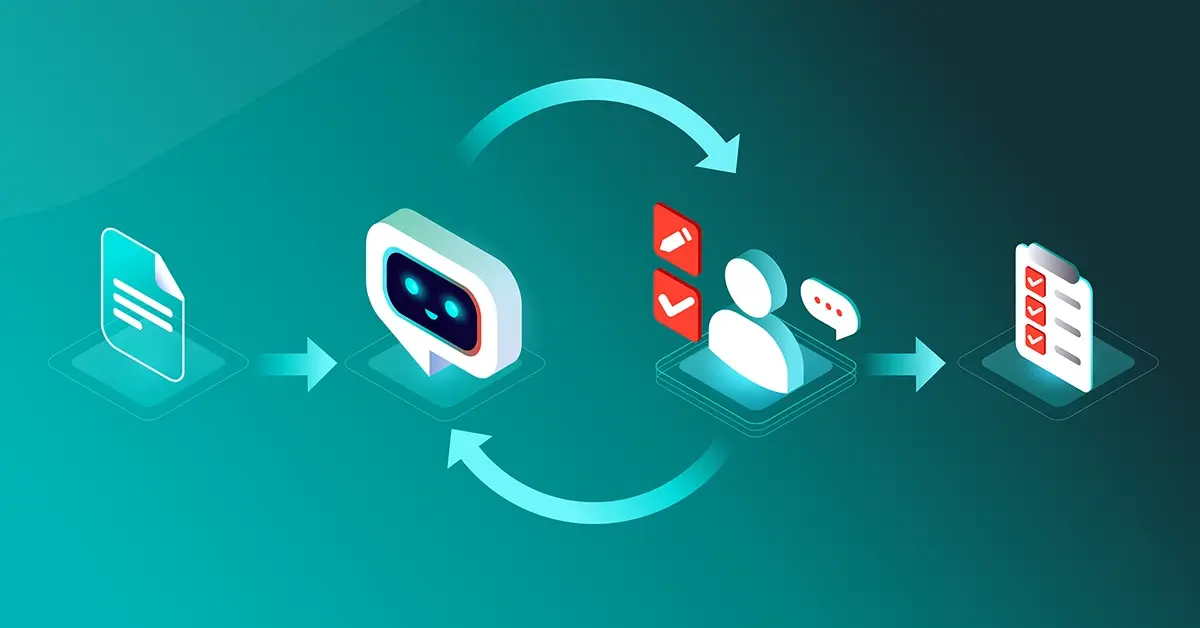
The second pillar is agent-assisted workflows. This is where the shift becomes more interesting. At this layer, AI is no longer just helping a person complete a task faster. It is beginning to execute pieces of a workflow: triaging, routing, synthesizing, drafting, handing off, monitoring, or preparing the next step in a process. The significance of this is not merely that work becomes faster. It is that the boundaries between teams and steps begin to change. The company starts to rely less on each human participant reconstructing context manually and more on systems that can carry context, apply logic, and move work forward in a structured way.
The third pillar is autonomous systems and AI-driven products. This is the horizon that many people jump to first, often prematurely. Here, the question is not only how AI improves internal work, but how it begins to execute bounded outcomes under human oversight, and how it shapes what the company builds externally. In some areas, this means more autonomous internal operations. In others, it means new product capabilities, new expectations from customers, and new forms of competitive advantage. This pillar matters because it points to where the first two are leading. But it is also the one most likely to be misunderstood if we skip the work of building the first two well.
This sequence matters.
The first pillar creates local leverage. The second turns local leverage into workflow leverage. The third turns workflow leverage into operating leverage and, potentially, product differentiation.
That progression is the strategic issue.
It is also why I do not think the current discussion around AI should be framed primarily as a question of whether teams will be replaced, or whether a single high-performing individual can now do the work of several people. There are isolated examples that make for compelling anecdotes, and some of them are directionally true in bounded contexts. But they are often taken as proof of a broader conclusion that does not yet follow. The more important and more practical question is not whether AI collapses the company into fewer people. It is whether the company is redesigning itself so that its existing expertise can operate with more leverage.
That is a very different framing.
Under that framing, the point of AI is not to diminish skill. It is to increase its range. Strong judgment becomes more important, not less, when the cost of producing a draft falls. Clear architecture matters more, not less, when implementation can be accelerated. Workflow design matters more, not less, when systems can begin to take over portions of execution. The organizations that benefit most will not be the ones that simply add AI to existing habits. They will be the ones that adapt their habits, structures, and expectations to the new capabilities in front of them.
That adaptation will not happen all at once, and it should not. Different functions will move at different speeds. Not every workflow should become agentic. Not every process should be delegated. And not every apparent gain at the task level translates into a real gain for the company. Some of the most important work over the next year will involve distinguishing where AI produces meaningful leverage from where it merely creates the appearance of motion.
Designing for AI Operating Leverage
But that is exactly why strategy matters here.
Without a strategic frame, AI adoption tends to fragment. One team experiments aggressively. Another waits. A few individuals develop strong practices. Others opt out. Tools proliferate. Expectations become uneven. Isolated gains appear, but they do not compound because the organization has not aligned around what the shift actually is.
With a strategic frame, the conversation changes. We can ask more useful questions. Where does individual assistance create the most value? Which workflows are constrained by repetitive, reconstructive effort that could be delegated? Which handoffs across the organization are failing because context is not moving cleanly? Which future product opportunities become more realistic if we build internal capability now? How should governance, accountability, and human judgment evolve as more execution moves into systems?
Those are the kinds of questions that make this worth treating seriously.
This is the first article in a series because I think the topic benefits from separation. Too often, discussions of AI collapse everything into one argument. Productivity tooling, agents, autonomy, and product strategy are treated as if they were interchangeable, when in fact they involve different capabilities, different risks, and different organizational implications. My view is that they are best understood as related, but distinct, layers of a broader shift.
So in the next pieces, I want to go deeper into each pillar individually: first AI-assisted work, then agent-assisted workflows, then autonomous systems and AI-driven products. I’ll close with some thoughts on what this means more broadly for how organizations should think about leadership, capability-building, and competitive advantage at this moment.
For now, the key point is simpler.
AI is not just another tool to be adopted unevenly across teams. It is a capability that is beginning to reshape how work moves through the company. The organizations that treat it that way will make better decisions than the ones that debate models and licenses while leaving the underlying operating system untouched.
That, in my view, is the real strategic question.