

Contents
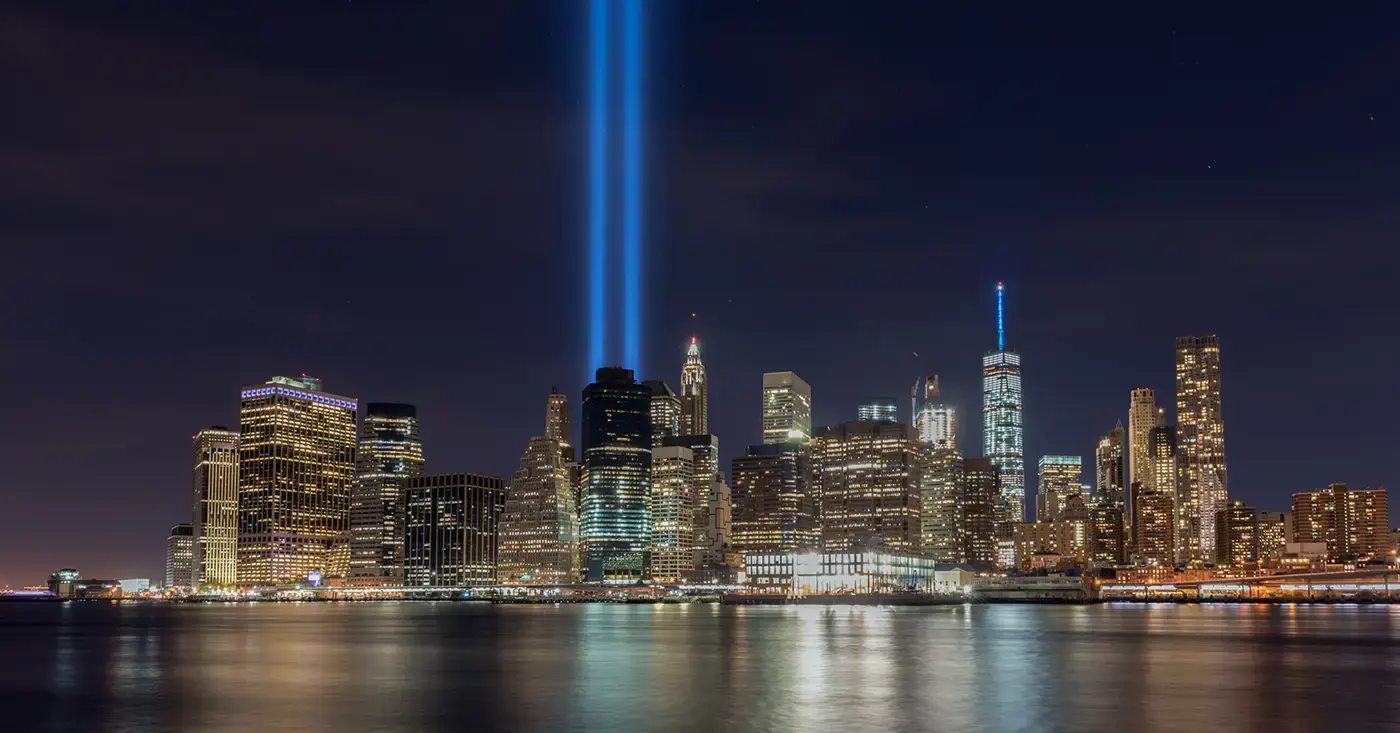
Tomorrow marks 25 years since September 11, 2001. Just a couple weeks ago, the House Permanent Select Committee on Intelligence (HPSCI) released a 25-year review of implementation of the 9/11 Commission Report, concluding: “The post-9/11 threat environment is no longer defined primarily by hierarchical terrorist organizations planning large-scale attacks from overseas safe havens. Instead, threats now emerge from both state and non-state actors operating across multiple domains and have created the conditions in which adversaries increasingly combine conventional, unconventional, and technological tools.”
Twenty-five years ago, in the days after the attacks, it became clear that the United States was at war with al-Qaeda. This one organization, albeit with branches and offshoots, including ISIS, would define the terrorist threat and counterterrorism efforts for much of the next two decades. But now, a quarter century later, the threat has morphed. Global jihadist terrorism is one threat among many facing the United States and corporations here and around the globe.
A Fragmented Field
The HPSCI assessment states that many recent attacks were carried out by “homegrown” terrorists or lone wolves “inspired by foreign terrorist organizations but not in close coordination with or tasked by such organizations.” A separate 2026 assessment from the Center for Strategic and International Studies (CSIS) reaches the same conclusion from a different angle: the United States now faces “a variety of formal groups, loose networks, and lone actors who intend to kill Americans,” with no single paramount threat among them.
According to the National Counterterrorism Center’s Counterterrorism Guide, top threats now include Iran-linked extremist groups, revolutionary and separatist groups, and cartels and gangs, in addition to jihadist groups. Here in the United States, far-right, far-left, and single-issue extremists pose domestic threats.
Beyond terrorist groups and lone actors, we face threats from foreign nation-states that leverage terrorist tactics. The most notable example of this is Russia’s “gray zone” operations against Europe, wherein individuals may be recruited to engage in activities like sabotage and arson against civilian targets to weaken European solidarity amidst Russia’s war in Ukraine.
Breakout Capabilities
In 2001, the 9/11 hijackers had to leverage ingenuity (smuggling boxcutters onto commercial airliners) to overcome limitations in their technological capabilities. Over the last 25 years, the proliferation of powerful technologies, such as social media, encrypted applications, and now artificial intelligence, has added to the terrorist toolkit.
The plot disrupted earlier this year against the UFC Freedom 250 event at the White House, in which roughly 20 conspirators planned to fly explosives-laden drones over a crowd, was financed on what one conspirator described in encrypted messages as needing only “$1,300 … [for the] drones and charges.” It is fair to assume that in the next few years, technical bottlenecks on small-group, mass-casualty attacks will continue to diminish.

The Rise of OSINT
One of the most significant developments in the last 25 years for monitoring the terrorist threat has been the rise of open-source intelligence (OSINT). With OSINT, greater insight into terrorist threats, networks, and indicators is available to public and private sectors alike.
According to the HPSCI report, “As the open-source environment continues to expand and evolve, and as private-sector industries that are developing dual-use technologies, likes artificial intelligence and quantum computing, continue to grow, open-source data will become increasingly important. In fact, OSINT is so instrumental to the [U.S. intelligence community’s] success that 20 percent of the President’s Daily Brief is derived from OSINT reports.”
What This Means for Security and Intelligence Programs
The anniversary of 9/11, in addition to being an opportunity for reflection and memorial, should provide motivation to us all to consider what threats might be coming next and whether security measures are adequate to prevent them. The 9/11 Commission Report famously cited “failures of imagination” by defenders as a major reason the attacks were able to succeed.
Corporate security and intelligence teams can take this opportunity to consider their own security posture relative to the three major evolutions discussed above:
Mark Freedman
Principal & CEO, Rebel Global Security
Mark Freedman is Principal and CEO of Rebel Global Security and was formerly the Chief of Staff for the U.S. Department of State’s Counterterrorism Bureau. This post is part of Liferaft and Rebel’s collaborative work to analyze the evolving global threat environment and provide critical insights to private sector and government clients.